
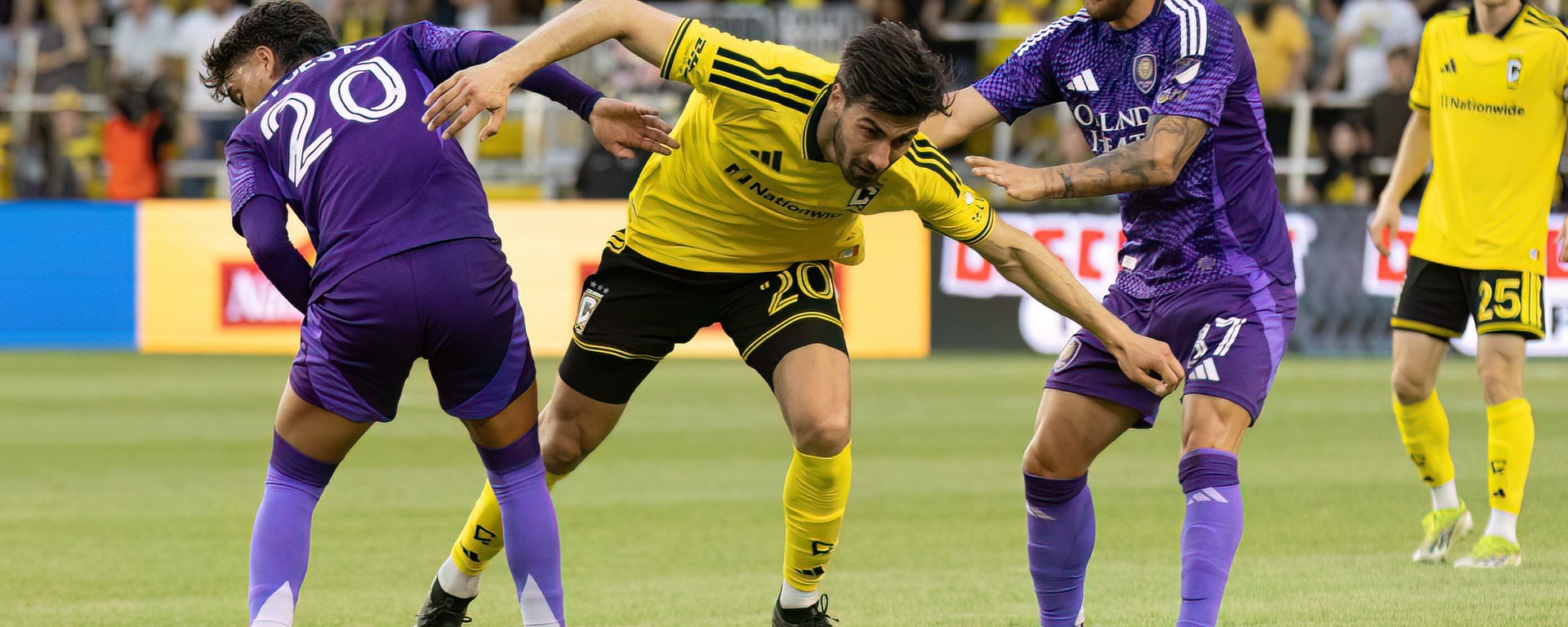
The Columbus Crew continued their sputtering start to the season, drawing at home to Orlando City SC in a game that may have yielded a point, but felt like a loss. The visitors took the lead inside the first 20 minutes, an opening phase of the game where Columbus looked second-best. The Black & Gold struggled to generate any semblance of attacking chances, looking bland and uninspired. A backbreaking blow came when Wessam Abou Ali went down with a non-contact knee injury. He was allowed to return by the Crew’s training staff, but minutes later he went down again after an awkward interaction with the pitch, resulting in him being stretchered off. Interestingly enough, after the Palestinian’s injury and Taha Habroune’s introduction into the game, Columbus began to look more dangerous. The Black & Gold ended up finding the tying goal late in the second half but was unable to capitalize and claim all three points. Another home game without three points for the Crew.
Let’s dive into all the tactics that went into yet another vanilla performance from Columbus.
Pressing to match Orlando’s shape
In the prior matchup against Atlanta, the Black & Gold opted to press in a 4-4-2 base formation that Henrik Rydström has become accustomed with. That all changed against Orlando as the Crew returned home to find an opponent playing an entirely different shape than Atlanta.
Atlanta rolled out a 4-3-3 against Columbus, but the most important part is the back four. Against Orlando, the Black & Gold were faced with pressing a five-back system that would turn into three as the wingbacks pushed higher. An entirely different backline calls for a change in pressing strategy.
That is exactly what the Crew did. Instead of applying pressure in the 4-4-2, they made a small tweak and moved a winger up alongside Abou Ali and Diego Rossi to round out a 4-3-3.
This is not exactly a groundbreaking change, but one that makes sense. With the strike partnership pressing alone, Orlando would have a numerical advantage along the backline and be able to break the press easier.
Pushing up against a back three with only Rossi and Abou Ali would also be tiring for both players who need to be involved in all aspects of the attack as well. Moving Max Arfsten or Andres Herrera alongside the two strikers balanced out the workload while also matching up one-on-one with Orlando’s centerbacks.
For all the disappointment of Sunday night, the Crew’s press worked decently well – especially in the second half. How Columbus adapts their pressure over the next few games against different formations and tactics will be something to look out for.
Offensive dilemma: The good and bad
The Black & Gold have a creativity problem. Through the first seven games of the season, the Crew look lost and incredibly stagnant in offensive passages of play. It would suffice to say it feels like the Gregg Berhalter years again, but at least Berhalter’s teams were able to grind out results and suffocate teams with inordinate amounts of possession.
Unfortunately for the Columbus faithful, the free-flowing attacking soccer of just a year or two ago has seemingly vanished. The Black & Gold have only scored nine goals on the year, with only one of those goals coming in front of a home crowd. This matchup with Orlando offered an opportunity to get back on the right track offensively given the visitors historically poor defense, but instead the home fans were met with disappointing results.
One of Columbus’ main problems is that they get entirely too focused with one passage of play: finding a driving winger to whip the ball into the box for Abou Ali or a late-arriving runner. It is a high-percentage play due to the difficulty to defend against it, but at times the Black & Gold will not even look to other areas of the pitch for offensive ideas.
The movement is also poor as well. Coming off Wilfried Nancy’s era of positionless soccer and interchangeable roles to Rydström’s seemingly more rigid 4-4-2 is night and day. Players now rarely venture outside their designated positional areas, outside of a few exceptions such as Rossi and the fullbacks.
This maddening emphasis on getting wingers in one-verses-one situations and whipping balls into the box is not working and will continue to fail now with Abou Ali out for the season. The good news for the Crew? They looked better offensively the minute Abou Ali exited the game.
With Habroune entering the game, Columbus played with no real striker on the field. Both Habroune and Rossi dropped deep to find the game and the interchanges started to look more seamless. Fullbacks tucked inside as midfielders as the wingers pushed against the backline. For a minute, it looked like the Black & Gold were finding something.
Then the Crew reverted back to the same old offensive strategy when Jamal Thiare and Hugo Picard entered the match. Almost every offensive ball went down the touchline seeking a Columbus player to cross the ball into the box. When that started happening again, players began making lackluster runs and not taking real chances to go forward.
When a different passage of play did come – Rossi dropping off to Habroune and receiving a clipped ball over the top – the Black & Gold scored. Even recycling a ball from the wing back to the center of the field caught the Orlando defense off guard simply by the fact that the Crew had not done that much up until that point.
Columbus does not need to be Nancy’s team again. Rydström does not need to throw caution into the wind, abandon his tactics and go back to what the former regime seemingly perfected with the Black & Gold. What does need to happen is finding the right players and shapes to allow for passages of play that keep the defense on its toes. The Crew are not catching defenses off guard, which is why they still struggle to score seven games into the season.
If Columbus can fix that, then fans might begin to see a turnaround in form coming up. That being said, the Black & Gold faithful will be hoping for proof sooner rather than later.

