
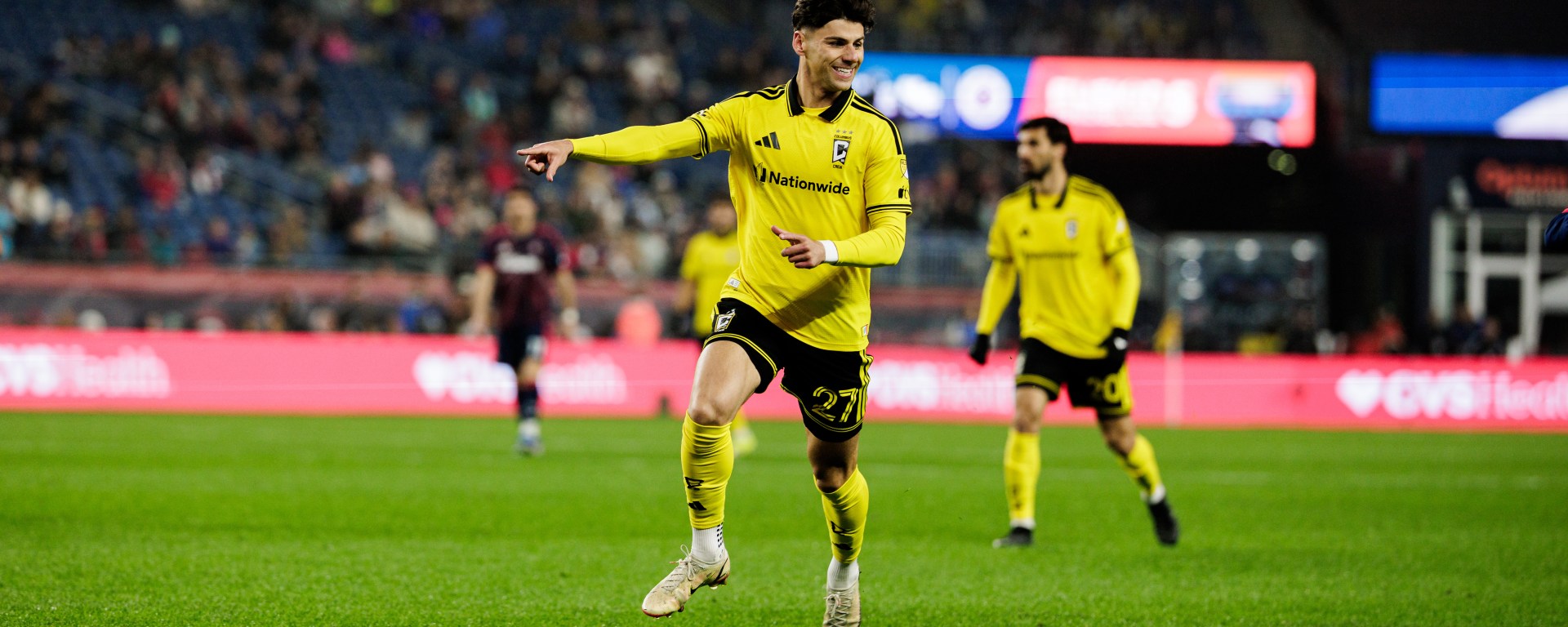
The Columbus Crew dropped yet another game on Saturday, this time against the New England Revolution away from home. The Black & Gold started out the game strong, controlling much of the first half and even taking the lead courtesy of Max Arfsten, but the wheels fell off in the second half. The minute Columbus exited the dressing room after the halftime break, New England found its footing and began to take hold of the match. The host’s breakthrough came on a free kick that found the head of a New England attacker, flicking it past Patrick Schulte into the far corner. From there, the hosts put their foot on the gas, and the Crew seemed to fade away until, in the final minutes of the game, Rudy Camacho pulled down a New England attacker to give the Revolution a penalty. The Revs converted, sealing all three points for themselves and giving Columbus its fourth loss of the year.
After a midweek victory in the US Open Cup, Henrik Rydström’s team has regressed. Let’s dive into all the tactics that sunk the Black & Gold for a fourth time this season.
The best first half of the season
The Crew’s first 45 minutes of play in New England showed promising signs for a team that has struggled to find any kind of successful consistency this season. Columbus controlled possession and had a couple of golden goal-scoring opportunities, but only converted one. Still, the first half showed that there is room for growth and a path for Rydström’s squad to be a good team.
Much of this success did not come from specific tactics, but rather from a mindset and a return to an old identity. For the past few years, the Black & Gold have been built on quick passing, interchanges, and controlling the ball. Through the first few weeks of this season, the Crew have gotten away from that identity and have struggled to grasp games based on the lack of possession.
That was not the story of the first half, though. Columbus was impressive with the amount of ball movement and creative play with short passes. The interchanges down the wings looked more seamless, and the attackers routinely dropped in deep to help aid the buildup, but not at the expense of the attack.
That creative and fluid possessive mentality put the Black & Gold in some really good spots, including two point-blank chances missed by Hugo Picard. The first half showed what the Crew had been missing in recent weeks: creativity and variation going forward. The better play resulted from a mindset change, but also from personnel switches.
Rydström switched a few pieces from Columbus’ previous MLS clash against Orlando, sliding Daniel Gazdag into the strike partnership and Picard on the right wing. Despite Picard’s inability to put the ball into the back of the net, both inclusions into the lineup made an immense positive impact.
Starting with Picard, the young Frenchman seemed to fit in better with Steven Moreira on the right side. When Andres Herrera checked into the game in the second half, the Black & Gold returned to the mundane status quo that has plagued them so far this season. Picard offered more attacking creativity and liked to stay wide, pushing Moreira inside to the midfield.
As for Gazdag, he filled into injured Wessam Abou Ali’s shoes nicely. While he has come under fire in the past year for his lack of production for a DP signing, the Hungarian offered a strong mix of runs in behind and was a creative fulcrum when he dropped into the midfield. Much of the Crew’s attacking success in the first half flowed through him thanks to his quick passing and ability to drag defenders out of position.
The main tactical tweak that brought Columbus the most success was the implementation of dueling false no. 9s. Without Abou Ali in the fray to play as a pure striker, Gazdag and Diego Rossi adapted by positioning themselves as attackers that can push the backline but also operated as the targets when they would come into midfield.
Oftentimes, one of the strike partnerships would drop deep and pull a center back with them. In that moment, the other attacker filled the space left behind and could then get in behind the defense. This simple passage of play was why the Black & Gold had so much success in the first half.
It was a solid 45 minutes to be a Crew fan, but that hope would quickly fade as Columbus came back out for the second half looking like a pedestrian shell of the squad that dominated the pitch a short time before.
Crashing and burning
The second half became a nightmare for the Black & Gold from the jump, but not entirely due to their own shortcomings. New England went into the half feeling discouraged, but came out with a plan that would turn the tide of the game in their favor.
First, let’s focus on the changes New England made. In the first half, the Crew controlled the game due to a concerted effort to move the ball quickly, finding combinations and overloads. Much of that success was also due to the fact that New England struggled in their buildup and turned the ball over often.
In the second half, the objective for the Revs was to slow the game down. When New England tried to go fast, Columbus turned them over and went back the other way to get dangerous chances. The tides changed with the Revolution focused on possession and lulled the Black & Gold to sleep.
The other change the Revs made had to do with their defensive shape. In the first half, New England’s wingers remained high most of the time when the hosts had to defend. This gave the Crew opportunities to find overloads on the wings with their own wingers and outside backs.
In the second half, the Revolution dropped their wingers deeper to aid in defense, and from there also help in a more controlled buildup as opposed to going long and quick.
One response from Columbus could have been to ramp up the press. This would have forced New England to play through pressure or go long, but would leave the Black & Gold vulnerable at the back. Seemingly resting on a 1-0 lead, the Crew decided to employ a resistant press that allowed the Revolution to control the ball with their defenders.
More time on the ball for the Revs defense meant additional time for the New England attackers to find pockets of space and build out of the back. While Rydström has not been keen on instituting as much of a ruthless press as the one Wilfred Nancy did, the resistance to pressure hurt Columbus more than it helped in this game.
From there, it was a process for New England to wear down the Black & Gold with longer spells of possession. The more time teams defend, the more tired they get, which is exactly what happened to the Crew. For much of the second half, Columbus looked incredibly lethargic while New England’s energy grew.
This game is the perfect storm of an opponent adjusting and Rydström whiffing at several key moments. Bringing off Gazdag and Picard brought the energy and creativity level down, opening the door even more for New England. Then, when the Revolution had more of the ball, still opting to go with the resisted press made a bad situation worse.
About a quarter of the way through the season, the Black & Gold have only one win and six points overall. If Rydström and the Crew cannot start to pull out results, there may be more change on the horizon.

