
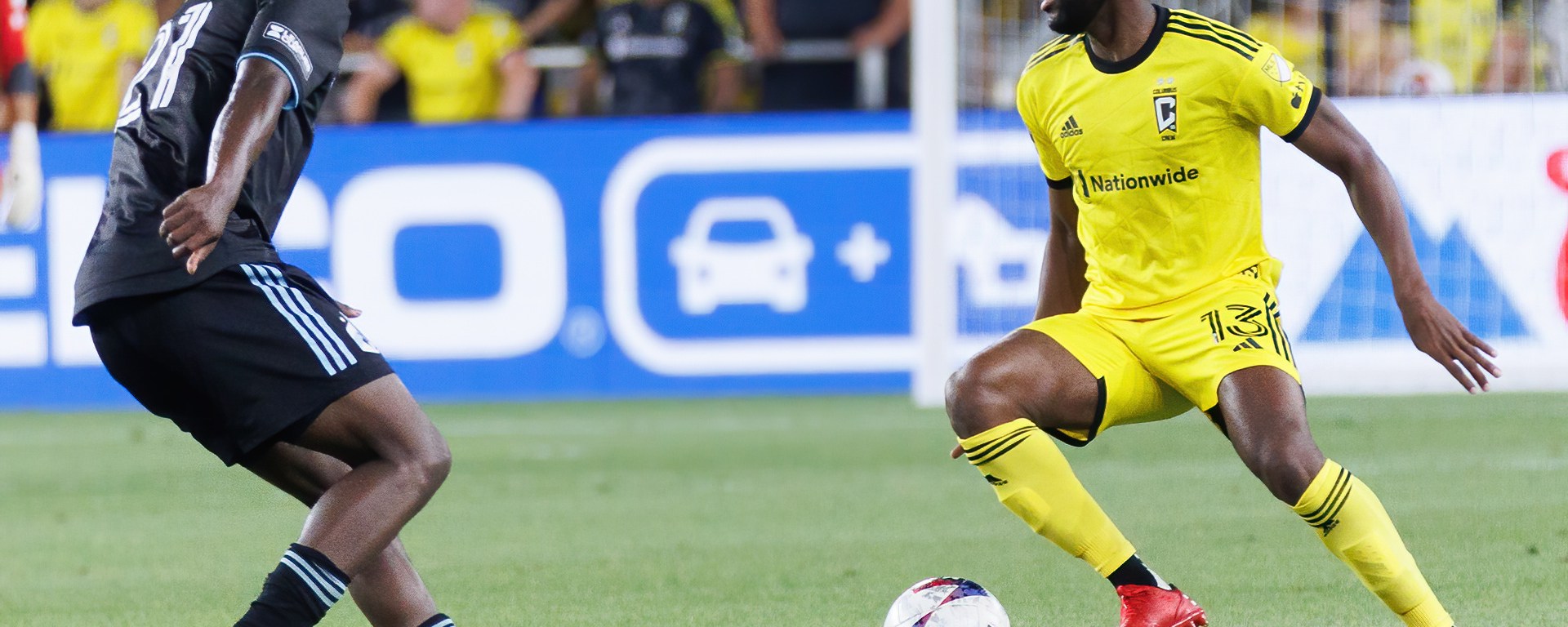
When the Columbus Crew triumphed over Club América with a 4-1 victory in the final group game of the Leagues Cup, it set the stage for a matchup against Minnesota United. A home match against the 10th place team in the Western Conference seemed like a favorable prospect. Naturally, the Crew was poised to handle matters and progress to the Round of 16.
However, Minnesota had different intentions. The Loons arrived at Lower.com Field with a clear strategy and persisted in their efforts until the last whistle. They managed to score in the 90th minute, equalizing the score at 3-3 after the Black & Gold team had seemingly secured the victory just seven minutes earlier. Minnesota’s late goal forced a penalty kick shootout, ultimately resulting in a 4-3 victory for the visitors.
This unfortunate turn of events eliminated Columbus from the Leagues Cup and now grants the Crew a two-week hiatus before resuming MLS play. While there are both positive and negative aspects to being ousted at this stage, it’s certain that the Black & Gold team anticipated playing competitive soccer this week.
In retrospect, as we analyze Columbus’ shootout loss against the Loons, let’s delve into what we learned from the game.
Defensive deficiencies
Throughout much of the season, conceding goals has proven to be an issue for the Crew. The Black & Gold are tied for the eighth-highest number of goals conceded in MLS play. Additionally, only one team in the Supporters’ Shield standings has allowed more than the Crew’s 33 goals conceded in league play.
While there have been instances when the Black & Gold appeared to have resolved their defensive challenges, these mistakes tend to resurface all too frequently, often at the most inopportune moments. The persistent reliance on players who are not specialized center backs, and are not lies at the heart of this predicament, and this concern was evident once again in the match against Minnesota.
Although head coach Wilfried Nancy has not explicitly stated a disregard for conceding goals, his strategy emphasizes possession and attack, with a concerted effort to push numbers forward in pursuit of scoring. This approach essentially constitutes Nancy’s defensive strategy. While Steven Moreira and Sean Zawadzki, both naturally positioned as a fullback and central midfielder respectively, contribute to ball possession and progression, they fall short as one-on-one defenders, despite frequently finding themselves in such scenarios.
The Loons were well aware of this vulnerability. They strategically fielded a taller player in Teemu Pukki to exploit the matchups against Moreira and Zawadzki, both of whom struggled to prevail against the forward, whether in aerial duels or ground battles.
Center back positioning also remains problematic, particularly for converted a fullback like Malte Amundsen and Zawadzki. After being redeployed as a wing back in the first half, Amundsen displayed signs of fatigue, likely due to the demands of covering the wing for the first time in months. Unfortunately, he failed to track his mark, Bongokuhle Hlongwane, when moved to center back in the second half, allowing an uncomplicated redirection into the net for the Loons’ second goal.
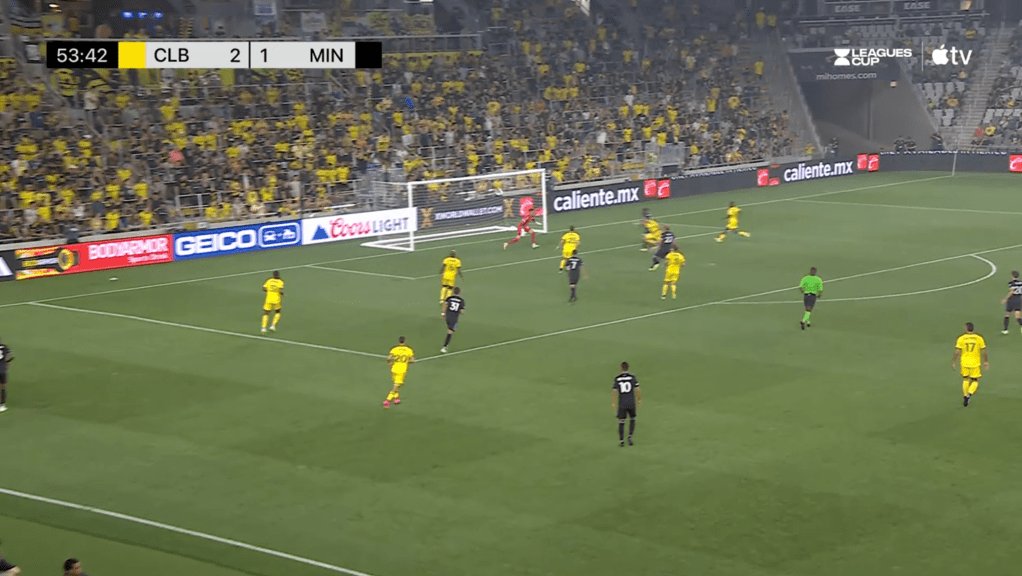
Zawadzki repeated an error he has made too frequently this season while playing as a center back, losing concentration late and needlessly stepping out of position to mark the ball carrier. Despite both Moreira and Mohamed Farsi closing in on Emanuel Reynoso after a defensive giveaway, Zawadzki unnecessarily shifted to his right, creating a considerable gap that Hassani Dotson capitalized on for the late equalizing goal.

Despite some defensive reinforcements acquired during the summer transfer window, substantial changes appear elusive. Yevhen Cheberko started this match as the left center back but struggled to cope with the physical demands of both MLS play and Nancy’s tactical style. He was substituted at halftime. Rudy Camacho, who is ineligible for the Leagues Cup due to cup tie rules, is anticipated to fill the central center back role he previously occupied under Nancy at CF Montreal. However, the 32 year old was part of defenses that conceded 50 and 44 goals respectively in the past two seasons.
The offensive prowess of the Black & Gold, particularly with the integration of Diego Rossi, is considerable and should position Columbus competitively in the regular season. Nevertheless, the events of Friday night serve as a stark reminder of the frenetic nature of MLS Cup playoff matches and how quickly a shakey defense can lead to elimination. Columbus was unable to contain a Loons side that had managed a mere 26 goals in 28 MLS games this year. Looking back to 2013, only two MLS Cup champions have conceded more than 40 goals in the regular season. The Crew is on course to concede 49 goals this season.
Should the Black & Gold aspire to secure trophies in this league, a reevaluation of their defensive approach is likely imperative.
Lineup decisions
If there’s a singular aspect for which Nancy has faced criticism this season, aside from his apparent disregard for defending, it’s his management of substitutions. Frequently, Columbus’ head coach opts to delay changes or keep players on the bench instead of introducing fresh legs into the game.
Nancy’s decisions regarding substitutions were once again subject to scrutiny in the match against Minnesota.
Analyzing the Crew’s bench, it’s challenging to envision many alternatives that Nancy could have employed to alter the course of the match. He had at his disposal two goalkeepers and three center backs as potential substitutes. But he also chose who was on the bench.
The context of the game also played a role. Two of Nancy’s substitutions occurred when the match was level, and he introduced attacking players to aid in the quest for the go-ahead goal, which the team managed to achieve with an assist from halftime substitute Yaw Yeboah, only to concede late.
However, it was undeniably intriguing to witness midfielder and captain Darlington Nagbe, as well as wing back Julian Gressel, being taken off the field. Both players have consistently completed full 90-minute matches and were not displaying overt signs of fatigue, at least not more than their teammates. Furthermore, Nagbe and Gressel appeared to be prime candidates for taking penalty kicks, a consideration that was certainly on Nancy’s mind when he made the decision to substitute them in the 78th minute.
While the replacement of Farsi for Gressel was a logical choice, given Farsi’s role as the starting right wing back for most of the season, positioning Kevin Molino as a central midfielder carried an element of risk. Molino, who had not featured for the Black & Gold since March due to an injury, is a player vastly altered by numerous knee injuries. He now seems to navigate the field like he’s traversing through quicksand, with delayed reactions to what’s going on around him. The opportunity that presented itself to Molino to secure a fourth goal and a victory for Columbus was once a foregone conclusion, but that is no longer the case.
Nancy opted for the experienced Molino, typically positioned further up the field, over central midfielder Isaiah Parente. Whether this choice stemmed from a preference for an advanced player to push forward or doubts about the 23 year old’s readiness for pivotal moments remains unclear. However, Molino’s inability to convert scoring opportunities and his struggles to contribute defensively when the match evolved into a back-and-forth affair ultimately proved costly for the Crew.
Choosing penalty kick shooters
There is no exact science to winning a penalty kick shootout. While shooters and goalkeepers can conduct some analysis of their opponents’ tendencies in these situations, a significant portion of success boils down to luck.
As a coach, your objective is to position your team for optimal success, and it’s arguable whether Nancy achieved that in this game. As previously mentioned, he substituted off two players who, presumably, would have been considered for penalty kicks. The initial three shooters for the Black & Gold comprised the team’s top offensive contributors, a choice that stands uncontested.
However, the fourth, fifth and sixth shooters were Molino, who seemed to lose his composure after a playful interaction with former teammate Dayne St. Clair, followed by Moreira and Amundsen. While all three are seasoned players, it’s challenging to overlook the possibility that more suitable options existed than two fullbacks.
Unfortunately, all three of these players failed to convert their attempts, enabling Minnesota to stay alive in the shootout and eventually secure victory. The conclusion was a painful one, and an alternate outcome might have been achievable through different decisions during the match.
Now, the Crew’s focus shifts back to MLS play.
 MASSIVE REPORT
One thought on “What We Learned: Crew vs. Minnesota United”