
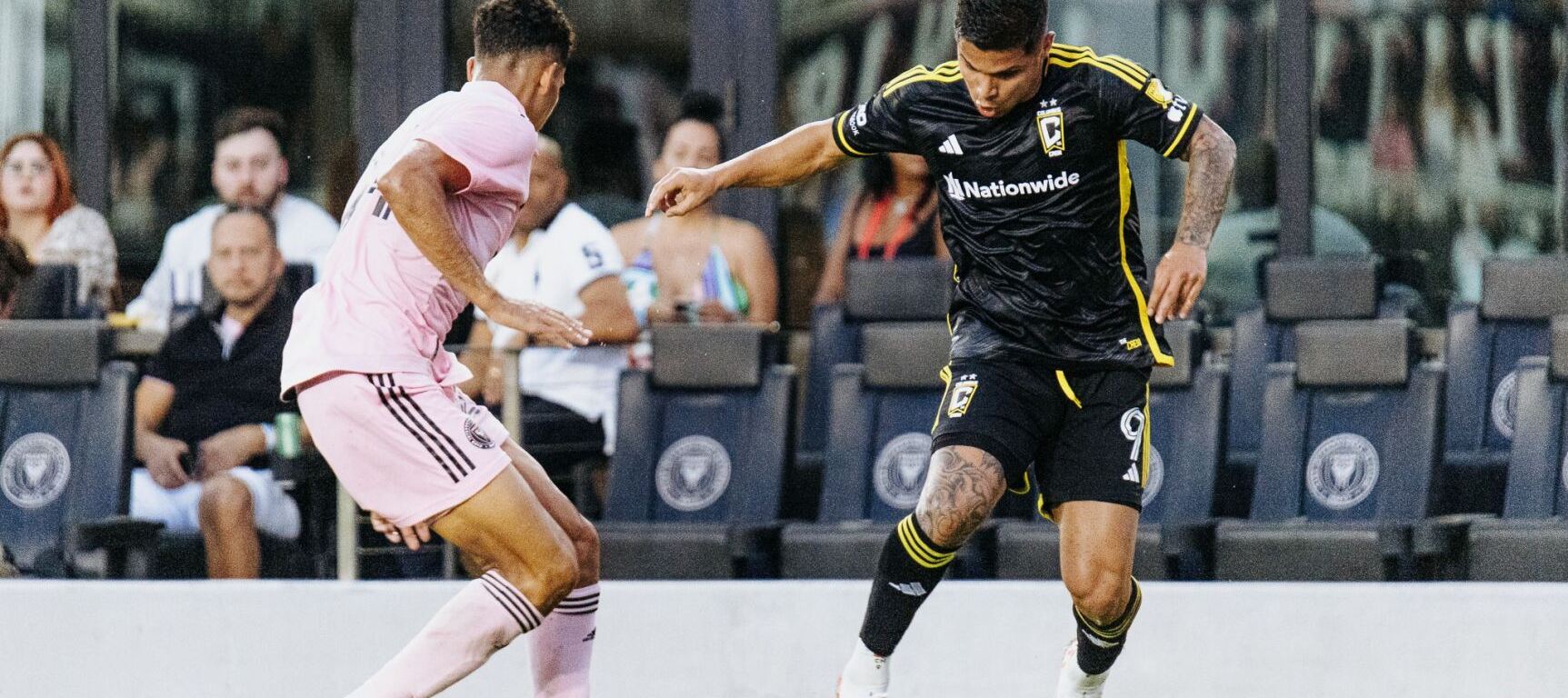
It’s the summertime, which means it’s the middle of the Major League Soccer season. But it’s also the summertime when plenty is going on outside of MLS (weddings, family gatherings, vacations, etc.).
Let me apologize for having a lot going on over the last few weeks and not bringing Massive Report readers What We Learned from Columbus Crew matches against Nashville SC, the New York Red Bulls and Inter Miami. I’m going to rectify that now with my main thought from each game for this week’s What We Learned and attempt to get back to a normal schedule next week.
To recap, the Crew went 2-0-1 in that three-game stretch, winning against Nashville and the Red Bulls before a disappointing draw at Miami. This extended the team’s unbeaten run to seven games, five of which have been victories. This streak has seen the Black & Gold rise to fourth place in the Eastern Conference and fifth in the Supporters’ Shield standings.
Let’s dive back into these games for the prevailing thing we learned from each match.
Columbus finds its defense vs. Nashville
Let’s begin this section by acknowledging that the Crew displayed improved defensive play in the two games prior to Nashville’s visit to Lower.com Field. However, it’s worth noting that the Chicago Fire and New York City FC, despite not being highly skilled offensive teams, still managed to score goals. On the other hand, Nashville, even without some of the team’s best offensive players, presented a different challenge altogether.
The Black & Gold put on a defensive display that was among their best this year. The 2-0 victory can be attributed not only to goals by Christian Ramirez and an own goal but also to the team’s ability to limit Nashville’s scoring opportunities. The visitors only mustered seven shots in the game, resulting in an Expected Goals value of 0.41. MLS MVP Hany Mukhtar was effectively contained, with just three shots, one of which was on target.
What stood out in this match was the chemistry exhibited by the makeshift backline. Malte Amundsen, Steven Moreira and Sean Zawadzki weren’t initially expected to start in these positions, but they had done so in four consecutive games leading up to this point. This continuity allowed the group to get comfortable and function as a cohesive unit, playing the style that head coach Wilfried Nancy expects from his center backs — maintaining possession and contributing to the attack. The result was a well-deserved clean sheet.
A special mention must be made for Moreira, who has played out of his natural position all season and continues to excel. He had his best game of the year in the middle of the back three, effectively neutralizing Mukhtar and providing guidance to Amundsen and Zawadzki throughout the match.
After witnessing that performance, I left Lower.com Field pondering what Nancy would do once his other center backs returned to full fitness. The Crew demonstrated the type of defensive performance necessary to compete at the top level in MLS. Although we still don’t have the answer, it will certainly be intriguing to see how the situation unfolds moving forward.
The Black & Gold win vs. Red Bulls without playing their best game
This season, there have been numerous occasions when Columbus performed well in a game but failed to achieve the desired result. Matches against Charlotte FC, Inter, FC Cincinnati (away) and Orlando City SC (at Lower.com Field) can all be categorized in this manner.
However, in the 2-1 victory against New York, the Crew wasn’t the superior team but managed to secure all three points. Although the Black & Gold strive to play attractive and controlled soccer, but need to be able to adapt and grind out wins when necessary.
Playing against the Red Bulls is always challenging for the Crew because New York aims to allow its opponents to possess the ball, while Columbus thrives on maintaining possession. Regardless of who is coaching the Red Bulls, they possess a knack for pressuring and unsettling teams that attempt to build from the back. This dynamic was evident in the match.
New York specifically targeted players on the Crew’s backline who lack experience playing in close proximity to the goal. Yaw Yeboah, the left wing back, and Zawadzki, the right center back, were singled out. Both players have spent most of their careers operating further up the field. As a result, turnovers occurred, disrupting the Crew’s rhythm in progressing the ball forward.
During the second half, the Black & Gold made adjustments, switching to a back four and moving Zawadzki into his more natural midfield position. However, after taking a 2-1 lead, Columbus struggled to regain control of the game. The Red Bulls kept the ball in the attacking half.
Overall, the Crew managed just six shots and an xG of 1.06, significantly below the team’s offensive capabilities. Some credit must be given to New York’s style of play, but there is also a lack of a Plan B when facing teams adept at disrupting possession-based strategies.
While not every opponent will pose the same challenges as the Red Bulls, it wouldn’t be surprising to see increased pressure on the Black & Gold’s players who are operating out of their natural positions in the defensive line.
For the first time all season, Columbus’ offense fails
The Crew currently leads MLS in scoring, with 42 goals in 21 games played, three more than the next closest team. Throughout the season, it has been the offense that has carried the Black & Gold to victories or losses.
You may wonder how the offense let Columbus down in a match where two goals were scored, and that’s a valid question. However, the Crew had 13 shots, five significant chances, and an xG of 2.32.
If you want to attribute the draw on the road to late defensive lapses, particularly as it occurred for the second time in four matches, that’s understandable. It’s worth considering that playing in Miami’s heat on short rest, with just two days between games, is a challenging circumstance. It’s not surprising that the visiting team tired in the later stages of the match. Had the Black & Gold converted the earlier chances they had, the late defensive lapse would have been inconsequential.
The most significant opportunities fell to right wing back Mohamed Farsi, who had two quick-succession chances to score after a beautiful pass from playmaker Lucas Zelarayan. Converting those chances would have put Columbus up 2-0 in the first half. Although Farsi isn’t known for his goal-scoring prowess, he could have had a better initial first touch…
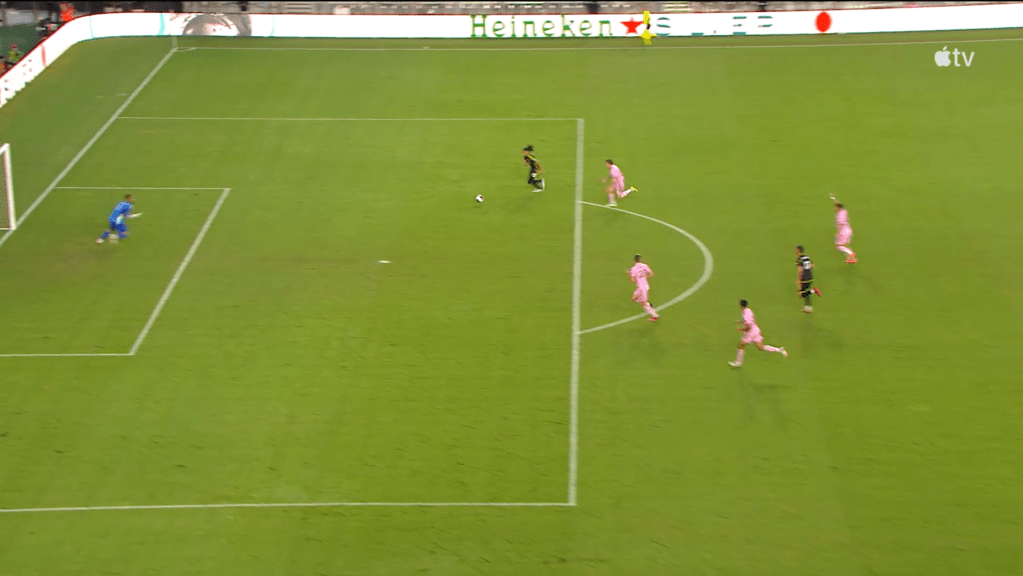
… or shown better awareness to collect the loose ball and put it into the mostly empty goal. Credit should be given to Inter for recovering when it seemed certain that Farsi would score, but the wing back had a genuine opportunity to alter the outcome of the game.
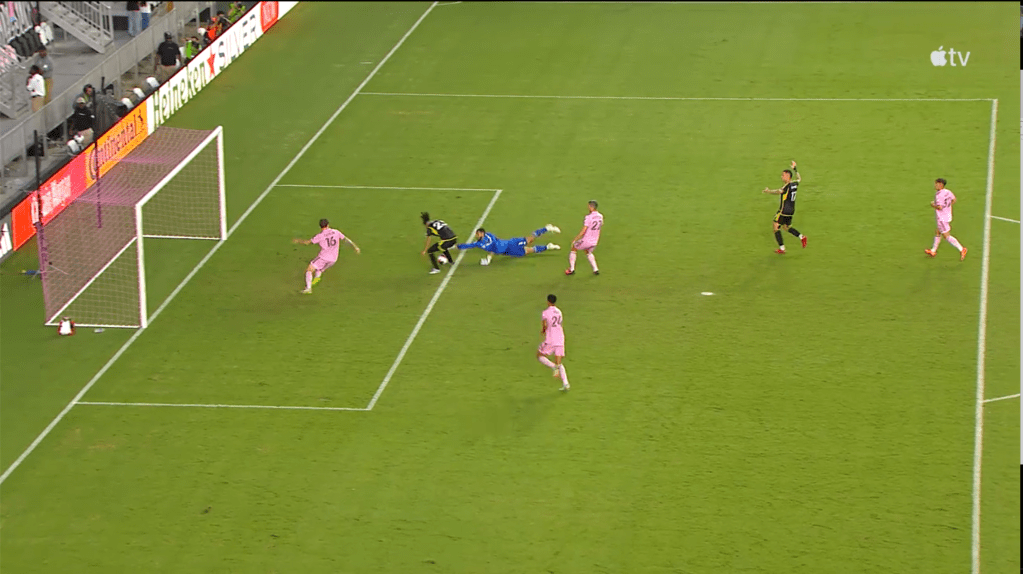
Nevertheless, there were numerous chances for the Crew to build a lead that Miami would struggle to overcome. Midfielder Alexandru Matan opted to shoot from distance after Darlington Nagbe’s goal instead of making a pass for an easier chance. Forward Cucho Hernandez had his shot blocked at the top of the penalty box shortly after Inter equalized, instead of either evading the defender or seeking a teammate in a better position. Zelarayan also narrowly missed a shot after a beautiful series of passes from the Black & Gold just before the 70th minute.
Could Columbus have done better in retaining possession during the late stages of the game to conserve energy and limit Miami’s late-match opportunities? Absolutely, and the Crew still needs to improve its consistency in closing out games. However, this was a match where the Black & Gold offense, as we have witnessed throughout the year, typically scores three or four goals, making the impressive Josef Martinez finish less consequential.


One thought on “What We Learned: Observations from the Crew’s last three matches”