
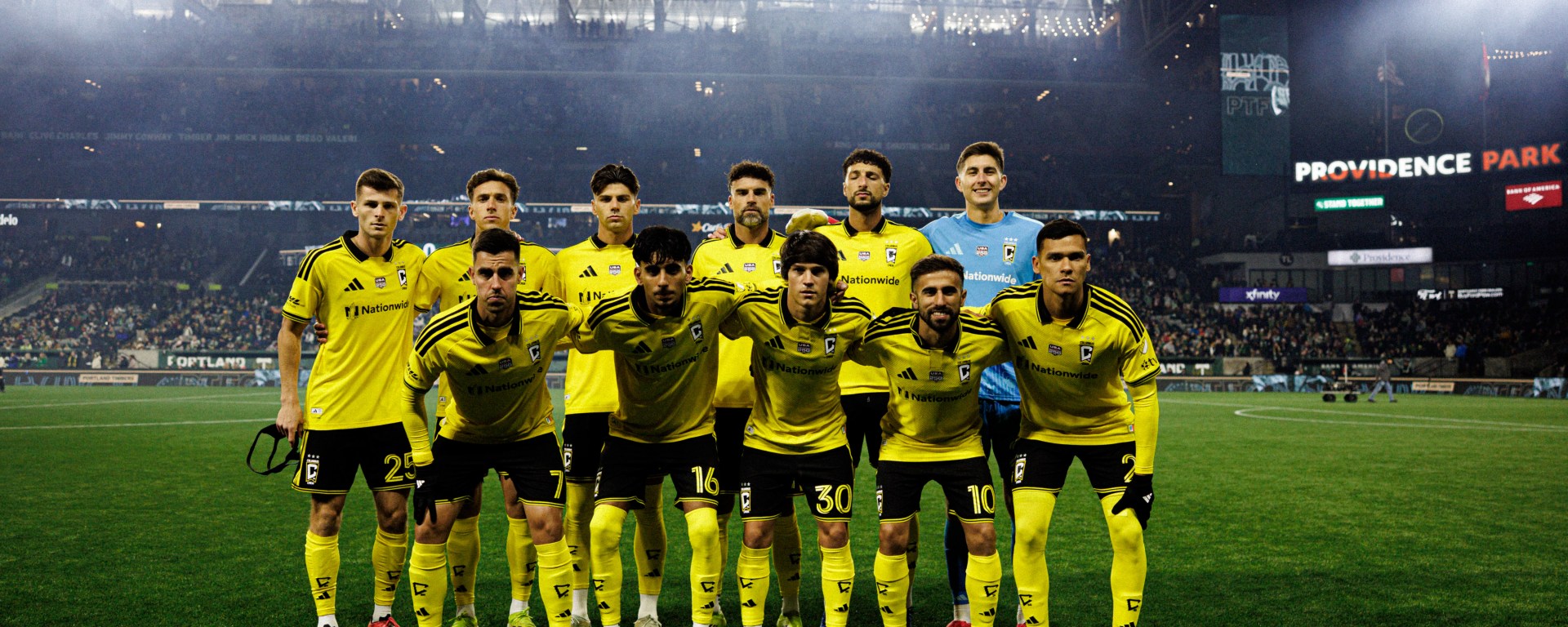
The Columbus Crew returned to action for the second match week of the 2026 season, this time traveling to Kansas City to take on fellow MLS original Sporting Kansas City. Yet again, it was Palestinian DP Wessam Abou Ali who opened the scoring for the Black & Gold off a bad giveaway from Kansas City goalkeeper John Pulskamp. After that, Kansas City found its footing, but the Crew took a 1-0 lead into the locker room. After the halftime break, things went immediately downhill for Columbus. A counterattack gave striker Dejan Joveljić an easy opportunity to even the game, then grabbing his brace a little over 20 minutes later to take the lead. The Black & Gold were plagued by the same ineffective defending as before but found a lifeline courtesy of forward Diego Rossi with eight minutes to play. The Crew had a chance to take all three points from the penalty spot, but Abou Ali’s shot was saved down to Pulskamp’s right side. The match would end 2-2, with Columbus only managing a point from its first two games of the 2026 season.
Early in Henrik Rydström’s tenure, the Black & Gold look like a shell of their former selves. Let’s dive into all the tactics that secured the Crew a draw in Kansas City.
Columbus’ midfield dilemma
Contrary to what many fans may believe, the Black & Gold’s defensive problems do not lie on the defense. Granted, Rudy Camacho, Malte Amundsen and Steven Moreira have played better before, but the crux of the Crew’s defensive issues lies in the midfield.
For years Columbus had one of the best midfields in MLS, largely due to the longevity of now-retired legend Darlington Nagbe. The pairing of Nagbe and Aidan Morris won the Black & Gold two MLS Cups, due to combination of tempo, technique and ball-winning ability. The Crew were able to play such attacking, free-flowing soccer because Morris always recovered to win the ball back, and Nagbe could dictate the game from deep-lying positions.
One of the most underrated qualities of this duo though, was their ability to cover defensively and allow the reinforcements to arrive in transition moments.
That aspect of the midfield’s game has been significantly lacking through the first two weeks of this young season. Part of it has to do with changing tactics under Rydström, but more of the issue has to deal with technical ability and work rate.
Simply put, the midfield pairing of Taha Habroune and Dylan Chambost last week against Portland was always destined to fail. Two attack-minded midfielders playing in this fluid system leaves the Crew’s backline open and exposed if they stray too far up the field. Simply put, Chambost and Habroune’s typical playstyle do not suit what Columbus wants to do.
Fast forward to this game against Sporting Kansas City, Rydström makes the switch to move Sean Zawadzki into midfield, slotting Moreira back into his RCB position. This allowed the Black & Gold to play with more stability, and Zawadzki actually showed promise in that holding role, but on the other side, Habroune looked lost in space. It is a difficult ask to toss a 20-year-old who got extremely limited minutes into the starting lineup, but Habroune’s struggles are due to the position he is playing in, not his quality as a player.
Often times last season, the young Homegrown product shined in roles as a part of Wilfried Nancy’s fluid front three. When given the freedom to create and flow, Habroune can be a dangerous asset. That being said, in that role he had significantly fewer defensive duties – typically only pressing and applying a re-press.
If the Crew want to limit the scoring chances that have plagued them in transition this season, they need to get back to having midfielders who are willing to do the dirty work and dictate tempo. Zawadzki has proven that he can be one of those guys, but now Rydström has to find his running mate. All signs point toward new signing André Gomes once his paperwork is processed.
There is another side to this issue that goes beyond the defensive issues. Many times, Columbus is caught out due to untimely turnovers that catch the Black & Gold out of position. The Crew have been put in those positions by themselves, mostly due to a lack of midfield presence who can slow the game down and keep possession.
This is where the loss of Nagbe becomes extremely prevalent. Nagbe had to ability to take the sting out of the game, ping around a few passes and break through waves of pressure to set off a buildup. Through the first two games of the season, the Crew have been woefully bad in that department.
Things like clearing the ball up to Abou Ali to hold up and getting the ball out of danger is fine, but Columbus is a team built to have the ball. Too often defenders will hoof the ball up the pitch without a recipient in mind, gifting possession back to the opposition.
As always, a new coach means the system will evolve and change over time, but it is doubtful that Rydström wants to see the Black & Gold play as many long balls as they have over the first two games. For now, the Crew have a glaring issue in midfield when it comes to transition defense, tempo and ball retention. Lucky enough for Columbus, they have more than enough time to fix it just two games into the season.
Chasing the game
After going down 2-1 in the 72nd minute, the Black & Gold had to make some changes to chase the game. That change came eight minutes later, when the Crew morphed into a different formation with some timely substitutions.
Columbus fans know that the Black & Gold typically line up in a three-back defensive look, flanked by wingbacks. The switch Rydström made late in the game, is to abandon that formation and move to a 4-2-4 shape instead.
Amundsen and Camacho remained as dueling centerbacks, while Andres Herrera and Max Arfsten rounded out the backline. Zawadzki and Sékou Bangoura held down the midfield, while Rossi and Hugo Picard pushed up as wingers. Abou Ali and Jamal Thiaré pushed against the interior of Kansas City’s backline as the main targets for the Crew’s attack.
This new shape gave Columbus a few options. First, it granted the Black & Gold width without sacrificing defensively. Arfsten and Herrera were free to push forward and aid in the attack, but Zawadzki would still sit as a holding midfielder in front of Camacho and Amundsen.
In doing so, the Crew were able to have a solid presence inside the box with Abou Ali and Thiaré, while also creating overloads on the outside with the tandems of Rossi and Herrera, and Picard and Arfsten.
By pushing the wingbacks higher up the field, Columbus morphed into an attacking 2-2-6. The Black & Gold may have sacrificed a little bit defensively to do so, but Zawadzki could drop back onto the backline for a 3-1-6 look if more stability in the back was needed.
The second thing this new formation gave the Crew was the option to apply a re-press easier. With six players distributed across the frontline, all areas of the pitch were covered and primed for a repress. The task behind the front line for Bangoura and Zawadzki was simply to win 50/50 balls and recycle possession to the attackers.
In these moments, Columbus found a lot of success sucking Kansas City to one side and then switching the ball to the opposite end of the pitch. By displacing the hosts’ backline, the Black & Gold were able to have space out wide on the opposite end to attack. This is exactly how Rossi’s goal came to be, due to an overshift from Kansas City’s defense.
All in all, there are positives and negatives to take away from this game. The Crew will be disappointed not to take all three points, but they responded well in the final moments when they needed goals to secure a draw. Questions still remain in the midfield, as Rydström will look for answers ahead of the first home match of his tenure.
 MASSIVE REPORT