
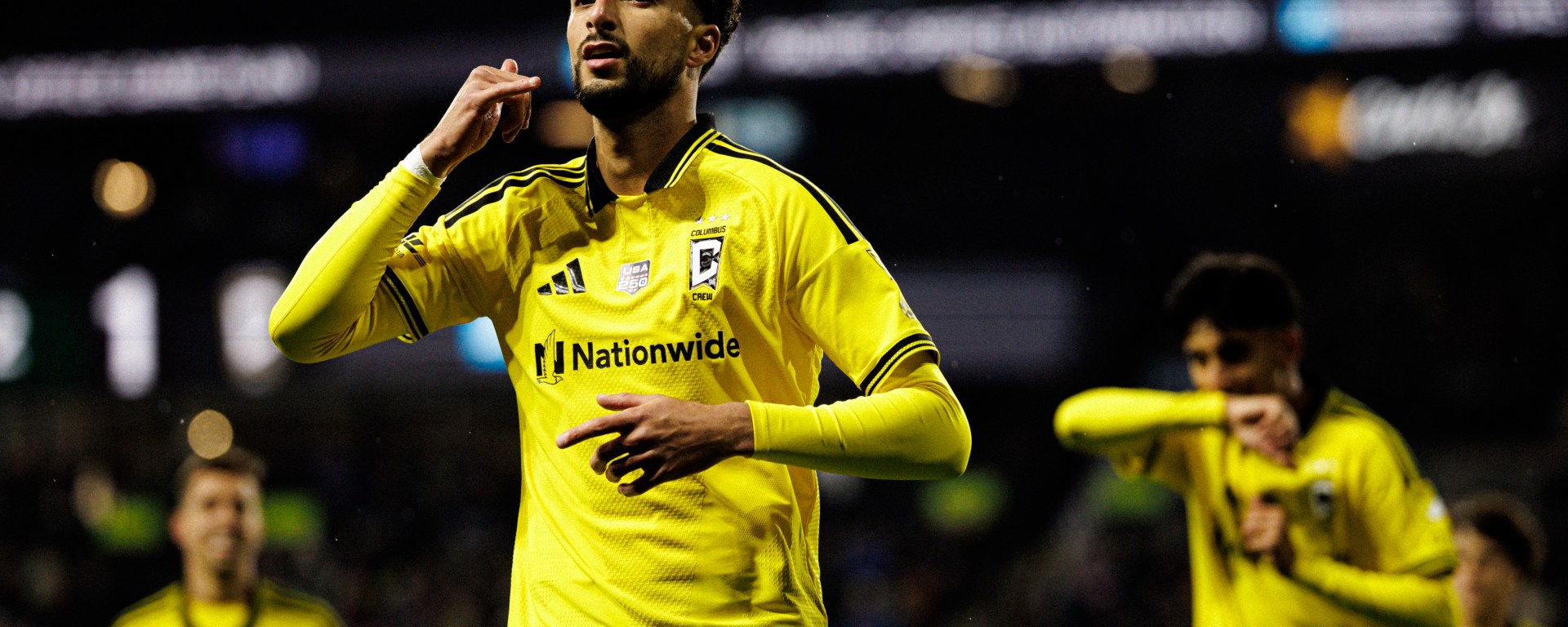
MLS action returned this weekend, kicking off the 2026 season as the Columbus Crew travelled west to face the Portland Timbers. After losing former head coach Wilfried Nancy in the offseason to a brief spell at Celtic, the Black & Gold hired Henrik Rydström to lead Columbus into the 2026 season. Rydström’s first few minutes at the helm of the Crew looked promising, when Wessam Abou Ali broke the deadlock to put Columbus up 1-0. Portland answered back quickly though, netting two goals to reclaim an advantage until Diego Rossi evened the game yet again with a curler from outside the box. It was a very open first half for both sides, but the game settled down in the second frame. The Black & Gold controlled the ball much more efficiently but could not convert any chances to take back the lead. Instead, Portland found the winner with minutes left in the match, catching the Crew defense napping to claim all three points.
In just the first game of a new season, Columbus has a learning opportunity. Let’s dive into all the tactics that went into Rydström’s first match in charge of the Black & Gold.
Familiar setup and shape with small caveats
There was a lot of speculation coming into the season about Rydström’s preferred formation and how he would set up the Crew. In the first game of 2026, fans of the Black & Gold witnessed a familiar sight: a team shape similar to Columbus under Nancy.
Rudy Camacho made his long-awaited return to the backline, flanked by new captain Sean Zawadzki and Malte Amundsen. Max Arfsten and Andres Herrera ran down the flanks, with the midfield manned by Dylan Chambost and Taha Habroune. Abou Ali, Rossi and Hugo Picard rounded out the attack for a typical 5-2-3 base formation.
As always, this shape was subject to change on offense and defense. On the defensive side, the Black & Gold stayed consistent in the base 5-2-3 shape. Often, both central midfielders would compress against the backline to provide additional support. At the same time, Picard and Rossi dropped deeper to assist as well, leaving Abou Ali alone up top to stretch the backline.
On offense, the Crew maintained the three-back look but shifted the base shape towards a 3-4-3 with both wingbacks pushing higher into the midfield. As we know after watching Columbus under Nancy for a few years, as the Black & Gold advance up the pitch, the shape changes.
The same is true under Rydström in this game. As the Crew moved toward Portland’s goal, the 3-4-3 morphed into a 1-4-4-1/1-4-5. Both outside centerbacks joined the midfield, with the wingbacks pushing higher as well.
These shapes should not shock Columbus fans who have watched the team over the past few years. That being said, there were a few small tweaks that Rydström instituted and became apparent.
The first minute change had to deal with the positioning of Picard and Rossi. Under Nancy, the attacking trio up top were essentially positionless. The positional diversity of the attacking players allowed for the coaching staff to give them complete positional freedom, leading to creative attacks and fluid play.
Under Rydström against Portland, Rossi and Picard were a bit more confined in their roles as dueling no. 10s. Both players drifted back deeper from Abou Ali into the midfield, facilitating the attack through the center of the pitch. This change allowed Abou Ali to push against the Portland backline, while making the opposing defense choose to step up on Rossi and Picard or drop off.
The other bright side to having two no. 10s was the fact that the Crew had natural late-arriving runners into the box. When the wingbacks got high up the pitch in wide positions, Abou Ali could make darting runs towards goal to clear out space for Rossi and Picard to arrive late at the top of the box and the penalty spot.
Granted, there are some downsides to changing from fluid to set positioning. The buildup can begin to feel unnatural and forced positionally, especially after years of playing a more fluid brand of attacking soccer. The other detractor is that if Picard and Rossi sit deeper, it leaves Abou Ali lacking support alongside him. Naturally, the wingbacks can tuck in to help out, but that did not happen much at all against Portland.
The other small change Rydström made had to deal with the depth of the defensive line. Under Nancy, Columbus lived and died by the high line. It often helped with retaining the ball and keeping attacks alive but also became a double-edged sword in transition moments where the opposition could break.
The Black & Gold’s defensive line against the Timbers played about 10-20 yards deeper than it did under Nancy. Nancy typically preferred to have his backline play extremely high even when the Black & Gold were on defense, often pushing up as high as the halfway line. Against Portland, the Crew’s backline settled midway in their own half, only pushing up to the halfway line when Columbus had the ball deep in Timbers’ territory.
Time will tell if Rydström will make more tweaks as the schedule rolls on, transitioning from Nancy’s system to his own. Possible formation changes and tactical switches will be on the horizon, especially if the Black & Gold drop games.
Same old defensive issues and new buildup problems
Although a team can change coaches, some habits are still hard to break. For the Crew, the habit of falling asleep at the wheel in transition defense moments bit them a few too many times against the Timbers.
The main problem in the 2025 season was primarily the caliber of Columbus’ defense. From the backline to the goalkeeper, the Black & Gold conceded too many goals, many of which were self-inflicted.
The same became true on Saturday night in Portland. After Abou Ali put the Crew in front, it was all Timbers heading towards Columbus’ goal. The Black & Golds’ wingbacks were consistently caught too high, and the midfielders were not in a position to cover. This left the Crew’s back three completely vulnerable against Portland’s charging attack.
The lack of having a true ball-winning center midfielder also hindered Columbus’ ability to halt these attacks. Typically a job for now-retired Darlington Nagbe or Zawadzki, Chambost (and then Sejdic when he was brought on) and Habroune were very poor in ball retention. The addition of newly acquired Andre Gomes will help, but without a safety valve in midfield, the Black & Gold were consistently in trouble.
On the other side, the Crew struggled mightily in the first half when it came to controlling the ball. Once a team that led the league in possession stats a season ago, Columbus looked disorganized and rushed in the first half of the game against the Timbers.
Some of these issues may have to do with the fact that it is the first game of the season with a new coaching staff, but a Black & Gold side that once thrived under pressure and answered it with possession, instead consistently dumped balls up to Abou Ali to try and hold up.
For the first game of the season, there was a mixture of good and bad. The Crew’s offense seemed to click, especially between Abou Ali and Rossi. Questions still remain on who will be the third member of that front three, but Rydström has options to play with. The blemishes of transition defense and quality of buildup still remain worrying question marks, but in a 34-game season, a lot can change quickly.
Not time to hit the panic button, especially after the first game of the season, but Crew fans will be expecting more from the upcoming road trip to visit Sporting Kansas City.
 MASSIVE REPORT
yes, Chambost and Taha aren’t destroyer dmids, but also, their positioning was terrible. no tactical understanding between them to have one stay in the middle to shield the back 3 when we turn the ball over. several instances of them both going pretty far to the same side at the same time. Sejdic improved the situation when he came on by demonstrating some tactical awareness and demands of the position.
LikeLike